What is Teledentistry
Select the links below to discover more about the technology of teledentistry and the many benefits and advantages for today’s oral health professionals.
What is Teledentistry?
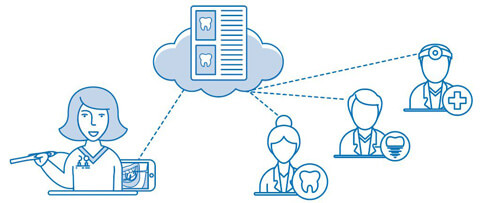
Teledentistry is the dental form of telemedicine, the use of telecommunications and allied technologies to deliver and coordinate care. In a practical sense, teledentistry means connecting everyone involved in the dental care journey for more seamless and efficient care.
How Does Virtual Dentistry Work?
The COVID-19 Pandemic led to a substantial increase in the volume of medical appointments happening virtually. Medical facilities began consistently holding video calls with patients, especially in the dental space. It all starts with a virtual dentistry consultation. This meeting is typically divided into 3 different parts:

how does list
Initial Discussion:
The consultation will begin with an initial conversation about symptoms patients have been experiencing, and any experiences they have had related to oral discomfort.
Oral Exam:
Dentists are fully capable of examining oral health virtually, where they can identify and diagnose critical dental problems. In many cases, the patient may be required to shine a flashlight in their mouth for dentists to get a better look.
Prescription:
Once patient symptoms have been evaluated, they may be prescribed treatment. Most treatments involve an in-person visit, although the dentist may be able to prescribe medication for immediate relief of symptoms.
The virtual dentist appointment is usually more efficient, and shorter than in-person visits. Though the length of the appointment can vary, online dental consultations eliminate the need for patient travel and wait times.
Advantages of Teledentistry
Virtual dentistry has many benefits over traditional, in person appointments. These advantages include:
advantages
- Reduced chair times: Since consultations are virtual, dentists are able to treat more patients in a given day.
- Connect with patients in remote locations: Easily provide care to patients in remote areas that cannot comfortably attend in-person appointments.
- Allows for enhanced collaboration: Providers can connect with new patient touchpoints, such as pediatricians, physicians, and skilled nursing facilities.
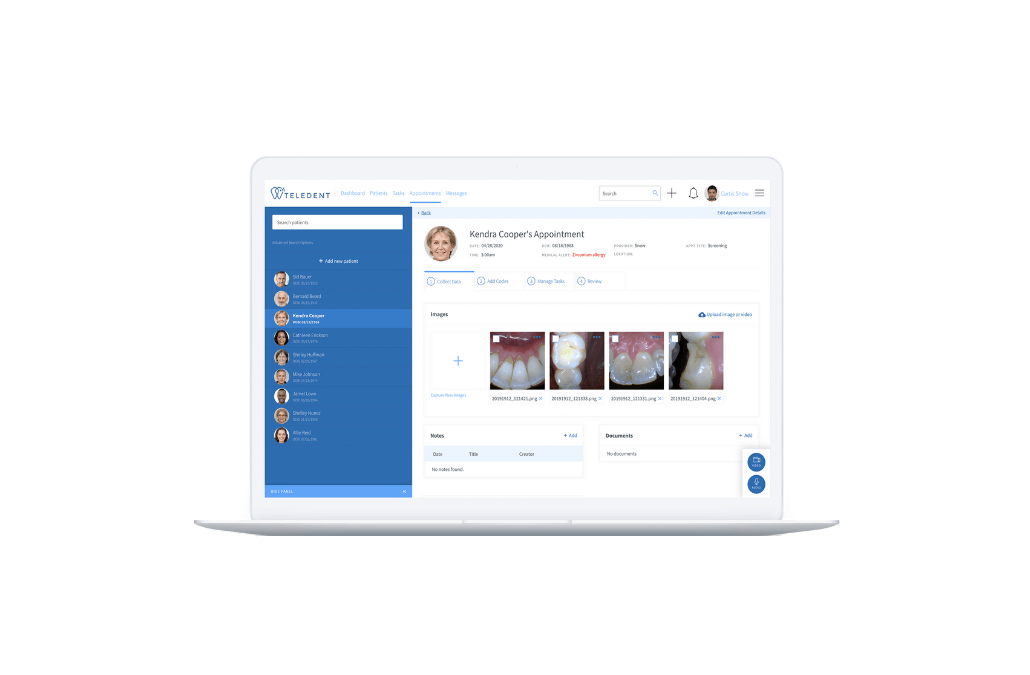
- Documentation & imaging in one secure place: Patient documents are easily accessible for sharing and coordination between dentists and specialists.
- Maintain quality control and optimize productivity: DSOs can now expand their offerings with remote mentorship and virtual site visits, allowing managers to easily check on partner practices for training and evaluations.
- Referrals made easy: Dentists can easily connect patients to specialists by making seamless, instant referrals and follow up appointments.
Overlapping Definitions of Teledentistry
overlapping definitions
Teledentistry Regulations Vary Across 50 States
Some states have specific legislation on teledentistry. Others merge teledentistry into telemedicine regulation. There’s a great variety of approaches to scope of practice, supervision, reimbursement parity, originating site requirements and even differences in what’s allowed between synchronous and asynchronous teledentistry or telehealth modalities.

regulations
How Can You Use Teledentistry in Your Setting
“What states allow teledentistry?” is for the most part the wrong question to ask since teledentistry is not an on or off switch. If you are a dentist or other dental professional, a better question to ask is, “How can I work within my state parameters to use telehealth technology effectively?” Some states incorporate dental telehealth under wider telehealth legislation. State Dental Boards have widely varying policies on scope of practice and expanded functions. Reimbursement for telehealth also varies under private payers or public payers such as Medicaid.
MouthWatch has compiled quick facts on teledentistry across all 50 states (and DC). These are from a variety of state board and state regulation sources. You should look at your state board resources on teledentistry and understand applicable telehealth, telemedicine and teledentistry laws for your particular setting. We also offer a free consultation for dental professionals or dental organizations looking to understand further how teledentistry with MouthWatch TeleDent can be deployed to meet their dental care goals.
Find information on Teledentistry in Your State
Key Teledentistry Facts & Statistics
The statistics below are based on a survey taken of over 520 individuals:
Use Cases of Teledentistry
Teledentistry or dental telehealth technologies have applications in the following key settings:
This means that you could deploy teledentistry from schools to nursing homes, private dental practices to pediatric offices and more. See our guide to teledentistry use cases. During times like the Covid-crisis, teledentistry is a form of crisis response when offices are closed or have reduced access and dental teams may be working remotely.
Teledentistry Patient FAQs
What specifically do patients want from a dental telehealth or teledentistry solution? Once they’ve reached out to you, what are patients expecting? What must a teledentistry vendor deliver in order for oral health professionals to meet patients’ needs?
“Can I message you with concerns and perhaps an image? Can I do it from my phone?”
This asynchronous mode of teledentistry is preferred by some patients, and certainly can be more efficient for some dental professionals. If the patient has sent diagnostically useful images and a good description of their complaint, you may have the evaluation already completed by the time of the video consult or can skip that step entirely.
“Can I schedule an online virtual consultation?”
Patients across the board are not only getting used to the idea of telehealth but expecting it as an option. Now more than ever. That may mean in their mind a live video consultation where they can see and talk with a professional face to face.
“How are you keeping my office visit as safe as possible?”
Dental practices are taking significant steps to make their offices some of the safest places in the world for a patient to be. Providing teledentistry communicates to patients that you are adopting technology to mitigate risks while improving patient experience. Retaining in-office visits for those really required and offering better pre-screening of patients, keeps everyone safer, including the dental team. Teledentistry builds patient confidence.
“How do I access my patient and exam data after the video consult?”
“How do I access my patient and exam data after the video consultation?” If your teledentistry platform enables a patient portal with clinical data sharing, then you have an easy answer. With TeleDent by MouthWatch the way that works is that patients follow a link in their portal registration email to initially set up their access. From then on it’s like logging into any website. The TeleDent patient portal is where video meetings, patient messaging and file sharing all takes place.
How do I schedule an appointment?
It should be really clear how they can act to schedule a teledentistry appointment or reach out to you with an asynchronous interaction (see above). They need to be able to answer easily, “What do I do to start?” If you’ve answered the question on your website and other communication channels about offering teledentistry, next they need to know how to start, and what to do next. This can be as simple as providing a form they fill out on your website, or you can book appointments over the phone if they are calling. Provide a link wherever you can to the specific starting point. Rather than a general link to your website, link to the form or make it really clear what they need to do next. That includes messaging such as “call us at our office number and we can schedule you right away.”
The first question patients will ask “Do you offer teledentistry?”
If existing or new patients have difficulty discovering you offer teledentistry services that make you and your team accessible now, they can’t take the next step. Make it clear in all your patient communication channels: your website, your outgoing phone message, via email campaigns, Facebook page, etc, and feature your virtual dentistry offerings at every opportunity - it could be the difference in acquiring new patients, and opening up new markets entirely.
“Will I have treatment plans I can look at and understand at home and share with a partner to discuss?”
Patients won’t know yet to be asking this! You can surpass their expectations and establish yourself as the dentist they refer to friends and family by giving them visual treatment plans they can look at on any device wherever they are. This is one of the key ways to make use of a patient portal for improving the healthcare journey and your practice’s digital presence.
Patient Portals & Teledentistry
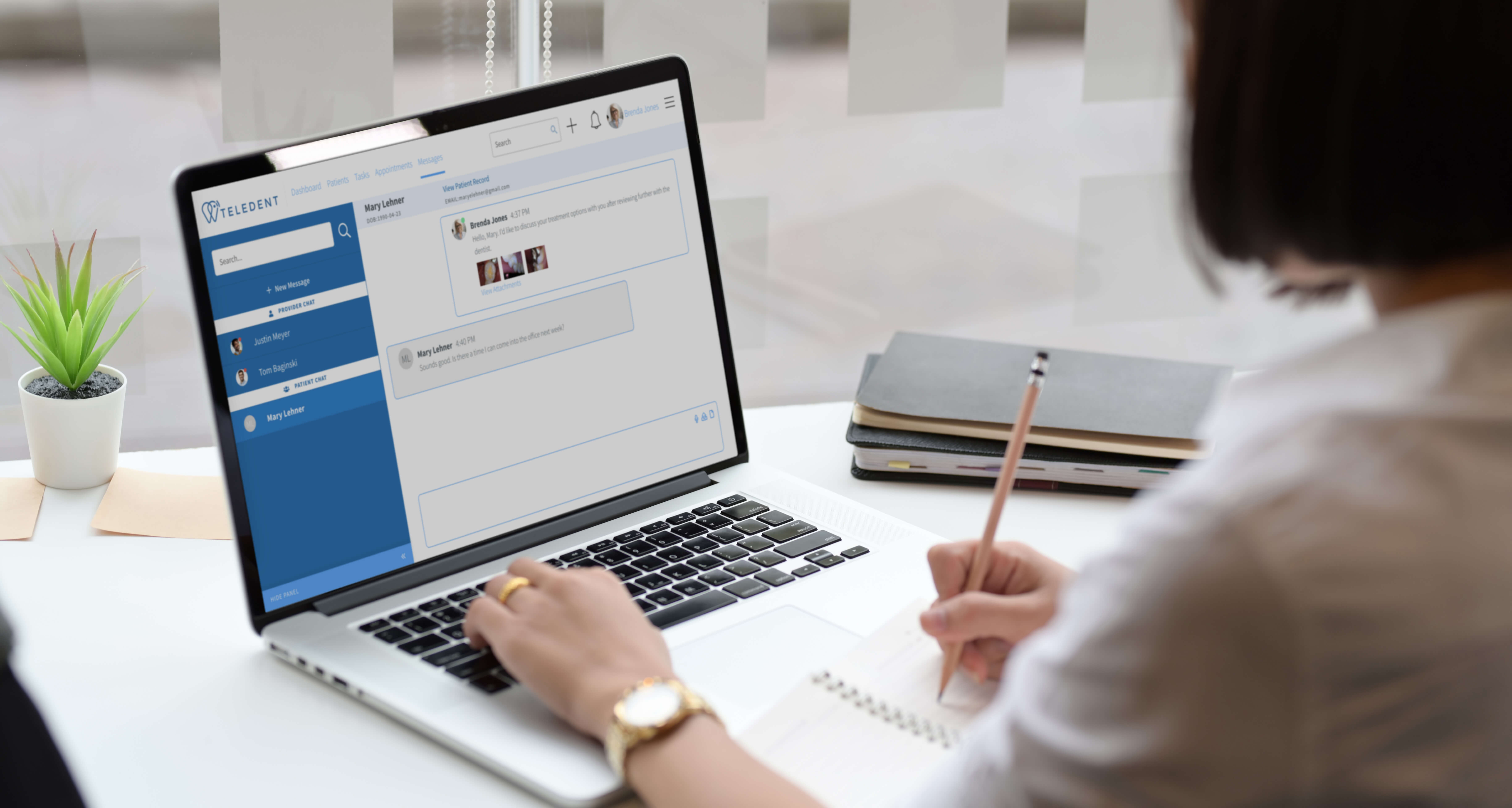
Not every product described as a teledentistry solution provides a patient portal. (See questions to ask platform vendors below). A patient portal is your online clinical space. Just like you wouldn’t do clinical dentistry on a crowded street, you don’t want to be using public-facing text messaging for clinical conversations. A patient portal is also a type of virtual dental home: patients know that they have a place online to go that is your digital clinical presence. The online teledentistry space where they can access their PHI securely or visual treatment plans you are sharing or to initiate a conversation or share an image.
Preparing a Space for Virtual Dentistry Appointments
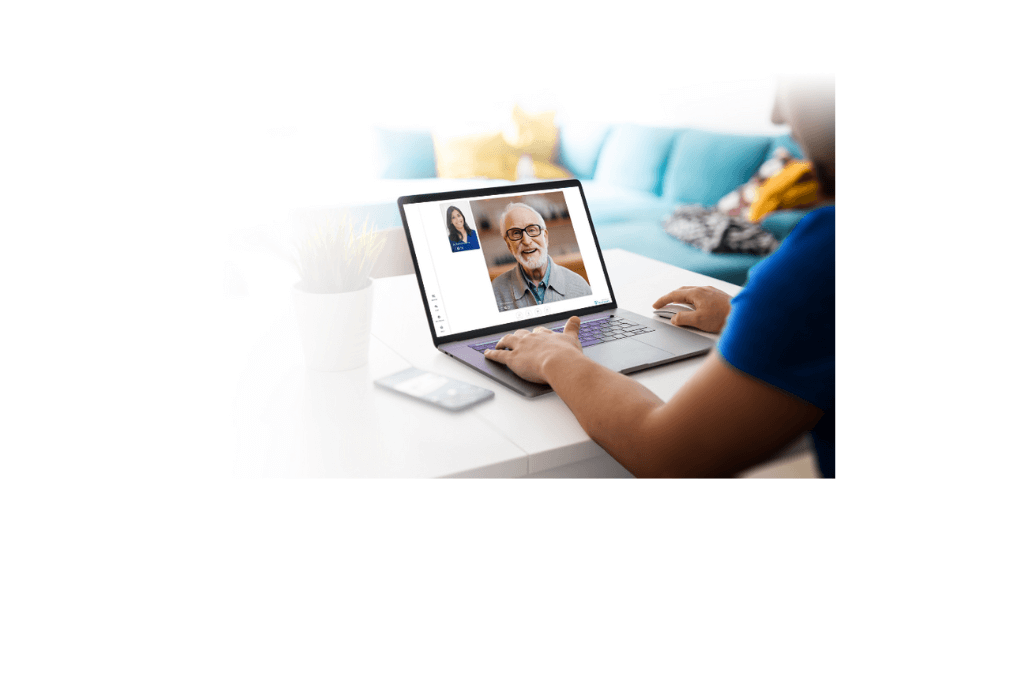
There are some simple steps you can take to setup a space either at a remote location or at your office to make an online video consultation a better experience. To help prepare a space for a video teledentistry consultation, consider the following bullet points:
-
Don’t have a door behind you. A patient might wonder, “Who’s going to walk through that door?”
-
Don’t have windows behind you, even if there’s no light shining through them. Your patient might think, “Well, who’s going to walk by that window? Is the window open?” You want to make sure that they feel comfortable, that their privacy is going to be maintained.
-
Try to keep it very simple visually behind you.
-
Make sure there’s no light behind you that would backlight you in their video view.
-
Test the view from your camera. Make sure that before you meet with a patient, you know what the view is going to look like.
-
Look directly into the camera. If you’re constantly looking up like that or looking over, you know, the patient may feel that they don’t have you with them. We don’t want to lose our patients' trust.
-
Have space around you in the camera view so the patient feels the setting is as realistic as possible. We wouldn’t have a conversation with the patient with our face right in their face. Even on a mobile phone, set your camera away from you. We don’t want to make the patient feel that their space is being invaded.
Two Key Modes of Teledentistry
two modes
two modes
Live | Synchronous
Store and Forward | Asynchronous

Using D9995 & D9996 CDT Teledentistry Codes
Frequently when using teledentistry, there is more than one provider involved but it’s important to know which provider will submit the code. The dentist that performs the oral evaluation, makes a diagnosis and creates a treatment plan will be the provider that reports the teledentistry CDT code. Teledentistry itself is not a specific service but rather a method of delivering care. When discussing the CDT codes for teledentistry, it’s important to know these codes are used in conjunction with another code, typically an exam.
As an example, a hygienist may offer mobile preventative care while having a collaborative dentist who performs an oral evaluation remotely, while the hygienist performs a prophylaxis and fluoride treatment onsite. In this example the dentist would submit CDT codes D0120 and D9996 for their exam and to report that teledentistry was used in this exam. The hygienist would report CDT codes D1110 and D1206 to report the prophylaxis and fluoride treatment performed on site.
The two full Current Dental Terminology (CDT) Code entries are:
2 codes
2 codes
D9995 teledentistry:
D9996 teledentistry:
4 Example Teledentistry Coding and Billing Scenarios
Here are 3 common scenarios in teledentistry between provider(s) and/or patients with coding guidance based on updates from the ADA:
ex codes
ex codes
Teledentistry Scenario 1
Teledentistry Scenario 2
ex codes row two
ex codes row two
Teledentistry Scenario 3
Teledentistry Scenario 4
Now add teledentistry codes for the right modality to evaluation codes
Questions to Ask Teledentistry Solution Vendors
faq vendor
“Can I message you with concerns and perhaps an image? Can I do it from my phone?”
This asynchronous mode of teledentistry is preferred by some patients, and certainly can be more efficient for some dental professionals. If the patient has sent diagnostically useful images and a good description of their complaint, you may have the evaluation already completed by the time of the video consult or can skip that step entirely.
“Can I schedule an online virtual consultation?”
Patients across the board are not only getting used to the idea of telehealth but expecting it as an option. Now more than ever. That may mean in their mind a live video consultation where they can see and talk with a professional face to face.
“How are you keeping my office visit as safe as possible?”
Dental practices are taking significant steps to make their offices some of the safest places in the world for a patient to be. Providing teledentistry communicates to patients that you are adopting technology to mitigate risks while improving patient experience. Retaining in-office visits for those really required and offering better pre-screening of patients, keeps everyone safer, including the dental team. Teledentistry builds patient confidence.
“How do I access my patient and exam data after the video consult?”
“How do I access my patient and exam data after the video consultation?” If your teledentistry platform enables a patient portal with clinical data sharing, then you have an easy answer. With TeleDent by MouthWatch the way that works is that patients follow a link in their portal registration email to initially set up their access. From then on it’s like logging into any website. The TeleDent patient portal is where video meetings, patient messaging and file sharing all takes place.
How do I schedule an appointment?
It should be really clear how they can act to schedule a teledentistry appointment or reach out to you with an asynchronous interaction (see above). They need to be able to answer easily, “What do I do to start?” If you’ve answered the question on your website and other communication channels about offering teledentistry, next they need to know how to start, and what to do next. This can be as simple as providing a form they fill out on your website, or you can book appointments over the phone if they are calling. Provide a link wherever you can to the specific starting point. Rather than a general link to your website, link to the form or make it really clear what they need to do next. That includes messaging such as “call us at our office number and we can schedule you right away.”
The first question patients will ask “Do you offer teledentistry?”
If existing or new patients have difficulty discovering you offer teledentistry services that make you and your team accessible now, they can’t take the next step. Make it clear in all your patient communication channels: your website, your outgoing phone message, via email campaigns, Facebook page, etc, and feature your virtual dentistry offerings at every opportunity - it could be the difference in acquiring new patients, and opening up new markets entirely.
“Will I have treatment plans I can look at and understand at home and share with a partner to discuss?”
Patients won’t know yet to be asking this! You can surpass their expectations and establish yourself as the dentist they refer to friends and family by giving them visual treatment plans they can look at on any device wherever they are. This is one of the key ways to make use of a patient portal for improving the healthcare journey and your practice’s digital presence.
Important Teledentistry Features for a Group or Practice to Consider

features for DSO
-
Is the system designed for one specific task, such as video conferencing, or does it have the ability to become part of a larger teledentistry workflow?
-
Does the system have HIPAA compliance?
-
Is the teledentistry system mobile friendly, for both patients and providers?
-
Can multiple providers participate simultaneously in a teledentistry consultation or collaboration?
-
Is the teledentistry system scalable for broader opportunities?
-
Is the teledentistry solution dental focused or is it a more general telemedicine solution?
-
Does it offer asynchronous teledentistry, the most common type for dental?
-
Can I invite multiple providers to collaborate on a case?
-
Can I share images with patients?
-
Will it work offline as well, in some important ways?
-
Does it support billing, reporting, user management, data/practice siloing for multi-practice/state implementations?
-
Does it enable web forms for patient intake?
-
Does it include a secure patient portal for clinical interactions with patients, including their secure access to PHI?
-
How can it create a documentable record of video chat and messaging and connect to a patient record?
Marketing Your Teledentistry Services
Patients and your community need to hear about the services you offer. Here are some quick bullet points that you can use as a checklist for getting the word out:
marketing list
Tellies Awards: Innovation in Teledentistry
MouthWatch launched the Teledentistry Innovation Award to shine a light on innovators and pioneers across the spectrum of connected dental care who have led the way and shown by example how teledentistry technology can enhance dentistry.